
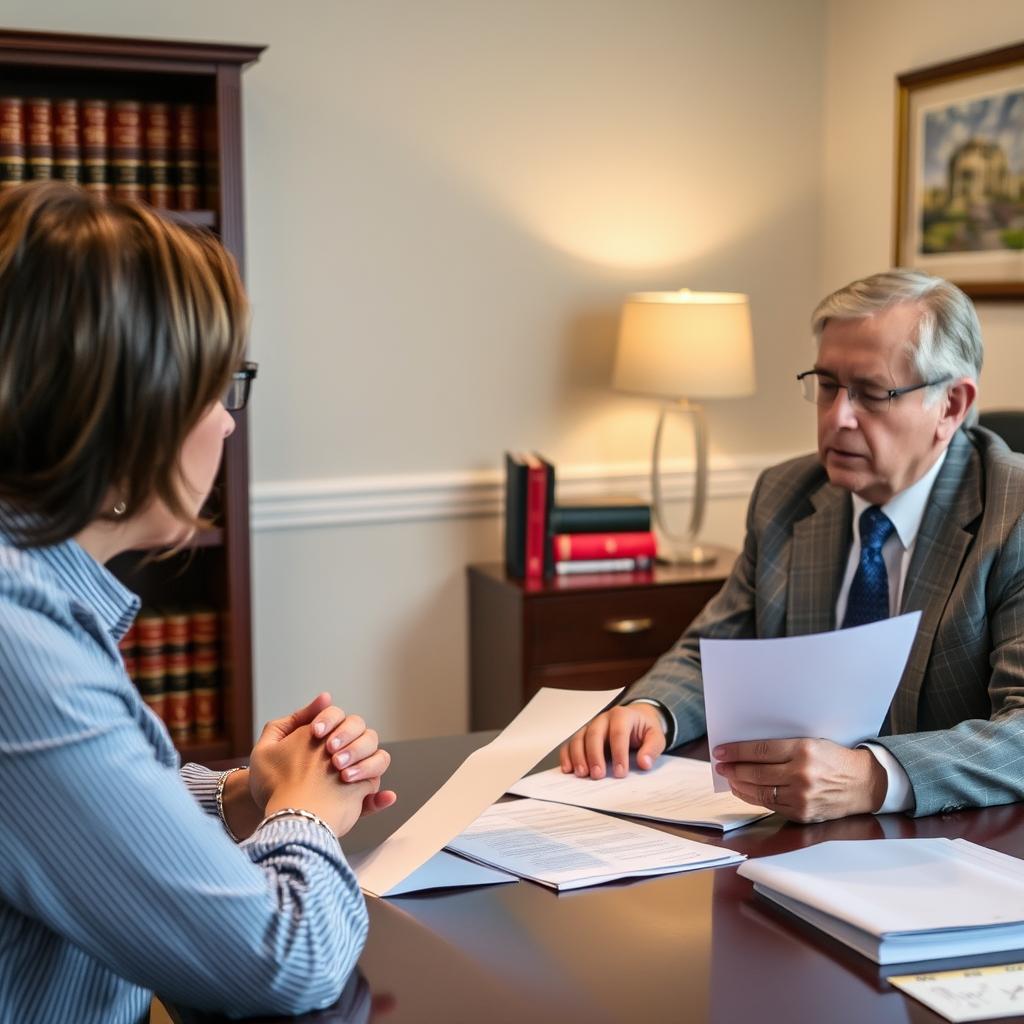
Military Divorce Lawyer Prince William County, VA
Serving as an active-duty service member or military spouse in Prince William County carries unique legal considerations when a marriage ends. Military divorces involve Virginia’s equitable distribution framework, federal statutes that protect servicemembers from default judgments, and rules for dividing military retired pay. The firm represents clients whose cases are connected to Marine Corps Base Quantico, Fort Belvoir, and the broader Northern Virginia defense community. Mr. Sris and his Of Counsel handle military divorce matters in Prince William County Circuit Court and Prince William County Juvenile and Domestic Relations District Court, guiding clients through property division, spousal support, child custody, and the interplay of federal and state law. To discuss how your military status affects your divorce, reach Law Offices Of SRIS, P.C. at (888) 437-7747. Law Offices Of SRIS, P.C. – Advocacy Without Borders.
What Military Divorce Means in Prince William County, Virginia
Prince William County is home to a substantial military population, and courts in the Thirty-first Judicial District routinely address issues that civilian divorces do not encounter. The Prince William County Circuit Court at 9311 Lee Avenue, Manassas, exercises exclusive jurisdiction over divorce and equitable distribution. The Juvenile and Domestic Relations District Court handles standalone custody, visitation, child support, and protective orders. Because a servicemember or his or her spouse may meet Virginia’s residency requirements through domicile while stationed in the Commonwealth, the county’s proximity to Quantico means a significant number of military families file in this venue.
Virginia is an equitable distribution state, not a community property state. Under Va. Code § 20-107.3, the court classifies assets as marital, separate, or hybrid and divides marital property fairly after considering factors such as the duration of the marriage, each spouse’s contributions, and the circumstances that led to the dissolution. For military families, the most consequential asset is often the servicemember’s retirement benefit. The Uniformed Services Former Spouses’ Protection Act (USFSPA) permits Virginia courts to treat disposable military retired pay as marital property and to divide it according to state law, provided the court has jurisdiction over the servicemember. A division order must comply with the statutory formula and the Defense Finance and Accounting Service’s implementation rules. The firm works with clients to ensure that retirement division orders are drafted correctly and that all other aspects of a military divorce—from temporary support to final decree—are addressed with the detail that Prince William County judges expect.
How Mr. Sris and His Of Counsel Handle Military Divorce Cases
Mr. Sris and his Of Counsel approach each military divorce with a focus on the practical realities of service life. They address the Servicemembers Civil Relief Act (SCRA), which can stay proceedings when military duties materially affect a member’s ability to participate. They also counsel clients on jurisdictional questions—whether to file in Virginia, in the servicemember’s home of record, or in a state where the spouse currently lives. The team coordinates valuation of military and civilian retirement accounts, considers the tax consequences of property transfers, and develops parenting plans that account for deployments, temporary duty assignments, and permanent change-of-station moves.
Because military divorces often involve complex documentation—leave and earnings statements, Thrift Savings Plan records, and personnel action forms—the attorneys work to ensure that discovery is thorough and that all marital assets are accounted for. They appear regularly in Prince William County Circuit Court and the J&DR Court and understand the local docket and procedures. When cooperation is possible, they negotiate separation agreements that resolve issues outside of court; when litigation is necessary, they present the evidence in a way that acknowledges both the servicemember’s obligations and the family’s financial realities.
About Mr. Sris and His Of Counsel Team
Mr. Sris, Owner and Founder of Law Offices Of SRIS, P.C., is a former prosecutor who founded the firm in 1997. He is admitted to practice in Virginia, Maryland, the District of Columbia, New Jersey, and New York. Mr. Sris testified before the Virginia House Courts of Justice Committee in support of 2019 HB 635 (chief patron Del. David Bulova).
Mr. Sris and his Of Counsel bring extensive combined legal experience. The team includes attorneys who have served as prosecutors and in law enforcement, providing a practical perspective on the challenges military families face. Together they handle military divorce matters throughout Northern Virginia, including cases filed in Prince William County. Results may vary.
Frequently Asked Questions
How does military service affect divorce in Virginia?
Military service adds federal-law dimensions to every stage of a Virginia divorce. The SCRA can delay proceedings while a member is deployed, the USFSPA governs how Virginia Code Title 20 provisions apply to military retired pay, and custody arrangements must account for possible relocations. The Prince William County Circuit Court applies Virginia’s equitable distribution factors alongside federal requirements. Working with an attorney who understands both systems helps ensure that no rights are waived by default.
What is the Servicemembers Civil Relief Act and how does it apply to divorce?
The SCRA protects active-duty servicemembers from default judgments and allows a court to stay proceedings when military duties materially affect the member’s ability to appear. A member or spouse may request a stay, and the court must evaluate whether the member’s ability to participate is impaired. In Prince William County, the court considers the specific deployment or duty circumstances when deciding whether to grant a continuance. The SCRA also imposes requirements on service of process and can affect temporary support orders.
Can a military member be served with divorce papers while deployed?
Yes, a deployed servicemember can be served, but service must comply with both Virginia law and the SCRA. The SCRA requires that the court be satisfied that the member has actual notice of the action before proceeding. If the member cannot appear because of military orders, the court may appoint an attorney to represent the member’s interests or stay the case. Prince William County litigants should expect the court to inquire about compliance with SCRA notice requirements before entering final orders.
How is military retirement pay divided in a Virginia divorce?
Dividing military retired pay in Virginia requires a court order that meets the requirements of the USFSPA and Virginia’s equitable distribution statute. The court first determines the marital share—usually a fraction based on years of creditable service during the marriage. It then decides on a fair division, which may be a percentage of disposable retired pay payable directly by the Defense Finance and Accounting Service. The order must be drafted with precision to be honored by DFAS. Mr. Sris and his Of Counsel handle the drafting and submission of these domestic relations orders.
Do I need to file for divorce in the state where my spouse is stationed?
You do not need to file where your spouse is stationed, but you must meet the residency or domicile requirements of the state where you file. In Virginia, at least one party must have been a bona fide resident and domiciliary for six months before filing. Military members often retain domicile in a home state while stationed elsewhere, so jurisdiction can be exercised in Virginia if either spouse satisfies the residency rule. The choice of forum affects property division and support standards, so it is a strategic decision best made with legal counsel.
For guidance on your specific situation, reach Law Offices Of SRIS, P.C. at (888) 437-7747.
Related Family Law Coverage:
Fairfax County family law lawyer |
Stafford County divorce lawyer |
Fauquier County family law attorney |
Loudoun County divorce and custody lawyer |
Arlington County family law representation
Virginia Legal Resources:
Virginia Code Title 20 — Domestic Relations |
Virginia Circuit Courts
Attorney advertising. Prior results do not guarantee a similar outcome. Results may vary.
Case results depend on a variety of factors unique to each case.