
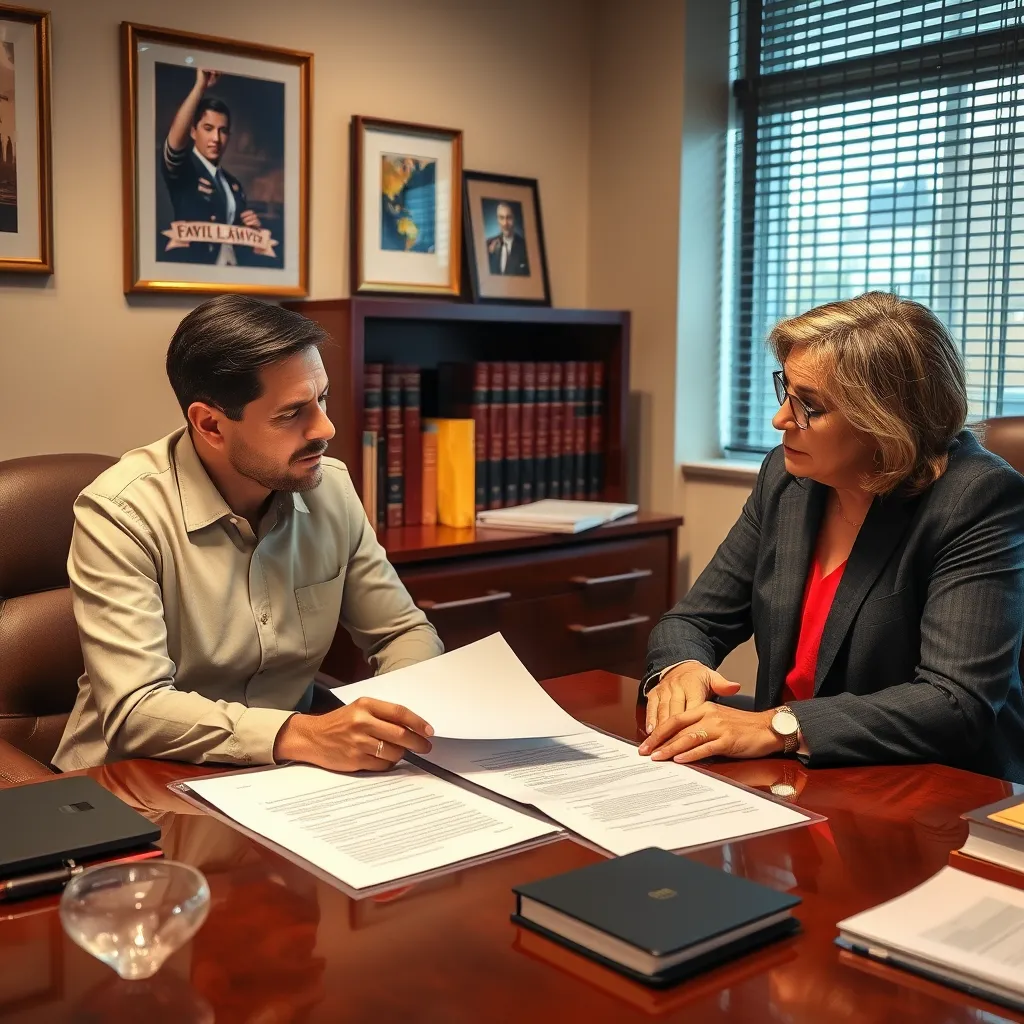
Military Divorce Lawyer Falls Church, VA
Military divorce presents unique legal challenges for service members and their spouses in Falls Church, Virginia. The intersection of Virginia family law and federal military statutes—including the Servicemembers Civil Relief Act (SCRA) and the Uniformed Services Former Spouses’ Protection Act (USFSPA)—demands careful navigation of residency requirements, pension division, and child custody arrangements when deployment or reassignment is a factor. India is not a signatory to the 1980 Hague Convention on Civil Aspects of International Child Abduction. Falls Church, located within the Seventeenth Judicial District of Virginia, is situated near major military installations such as the Pentagon, Fort Myer, and Joint Base Anacostia-Bolling. Many families in the Falls Church area include active-duty personnel, reservists, and military retirees, making familiarity with the specialized procedures that govern military divorce essential. At Law Offices Of SRIS, P.C., Mr. Sris and his Of Counsel team focus on protecting clients’ rights throughout the divorce process. The firm has represented service members and their families since 1997, grounding its approach in both extensive experience and a thorough understanding of the statutory and procedural rules that apply in Virginia military divorce cases. To request a consultation, call (888) 437-7747. Law Offices Of SRIS, P.C. – Advocacy Without Borders.
What Military Divorce Means in Falls Church
For military families in Falls Church, a divorce proceeding involves both Virginia domestic relations law and federal rules designed to protect active-duty service members. The Falls Church Circuit Court, located at 300 Park Avenue, Suite 151W, handles all divorce complaints, equitable distribution of property, and spousal support determinations under Virginia Code Title 20. Matters that concern child custody, visitation, and child support, when not part of a divorce action, proceed in the Falls Church Juvenile and Domestic Relations District Court. Because of the concentration of military personnel in Northern Virginia, the court regularly addresses issues such as the division of military retired pay, the effect of deployment on parenting plans, and the application of the Servicemembers Civil Relief Act to stay proceedings when a party is on active duty.
Virginia allows service members and their spouses to file for divorce in Falls Church if one of the parties meets the state’s residency requirement. The SCRA further provides that a military member may retain their domicile or legal residence for jurisdictional purposes even when stationed out of state, which can affect where a divorce may be filed. These overlapping statutes require careful analysis to ensure the proper court hears the case. Mr. Sris and his Of Counsel routinely guide clients through the jurisdictional questions that arise in military divorce, helping them understand whether Falls Church is the appropriate venue and how federal protections interact with Virginia’s separation and fault grounds for divorce.
Virginia requires at least six months of domiciliary residency before a divorce suit may be filed in the Commonwealth.
Source: Va. Code § 20-97. Virginia Code § 20-97
Reviewed by Mr. Sris, admitted in Virginia, Maryland, District of Columbia, New Jersey, and New York.
Virginia follows equitable distribution principles under Va. Code § 20-107.3, which considers eleven statutory factors to divide marital property fairly but not necessarily equally.
Source: Va. Code § 20-107.3. Virginia Code § 20-107.3
Reviewed by Mr. Sris, admitted in Virginia, Maryland, District of Columbia, New Jersey, and New York.
How Mr. Sris and His Of Counsel Handle Military Divorce Cases
Military divorce cases demand a coordinated approach that addresses both the emotional aspects of family separation and the technical requirements of state and federal law. Mr. Sris and his Of Counsel begin by assessing the service member’s and spouse’s respective legal positions, including the spouse’s rights under the USFSPA to a share of military retired pay, the calculation of spousal support under Virginia’s statutory factors, and the impact of deployment on child custody. A key part of the firm’s work is ensuring that all mandatory waiting periods and notice requirements—including those under the SCRA—are satisfied so that a final decree of divorce is valid and enforceable.
The team places emphasis on clear, upfront communication. Whether the matter involves a contested fault-based divorce, a no-fault filing after separation, or a negotiated settlement, Mr. Sris and his Of Counsel explain each step of the Falls Church court process, from filing the complaint to attending the final hearing. They help clients gather the documentation necessary for a military divorce, including Leave and Earnings Statements, service records, and retirement account information, and they work collaboratively with forensic accountants and pension valuators when complex asset division is required. Throughout the case, the firm’s priority is to protect the client’s parental rights and financial interests while moving the matter toward conclusion as efficiently as the court’s calendar and the unique circumstances of military life allow.
About Mr. Sris and His Of Counsel Team
Mr. Sris, Owner and Founder of Law Offices Of SRIS, P.C., has concentrated his practice on family law and related litigation since establishing the firm in 1997. A former prosecutor, he brings an understanding of courtroom procedure and evidence assessment that informs his approach to military divorce cases. Mr. Sris is admitted in Virginia, Maryland, the District of Columbia, New Jersey, and New York, and he has represented service members and their families in the Falls Church courts for many years. In 2019, Mr. Sris testified before the Virginia House Courts of Justice Committee in support of 2019 HB 635 (chief patron Del. David Bulova), a measure that addressed equitable distribution procedures. This legislative experience gives him an in‑depth perspective on the statutory framework that governs property division in Virginia divorce actions.
Mr. Sris is supported by a team of Of Counsel attorneys who focus on various aspects of family law. The Of Counsel team includes practitioners with backgrounds in criminal defense, child welfare, and business law, giving the firm the ability to manage the ancillary issues that frequently accompany a military divorce—such as protective orders, custody modifications, and complex property issues. All of the firm’s Of Counsel attorneys are engaged through Excella and work collaboratively with Mr. Sris to tailor the legal strategy to the specific needs of each client. Together, Mr. Sris and his Of Counsel bring extensive experience to military divorce cases, grounded in a commitment to achieving thorough, client-focused resolutions. Results may vary.
Frequently Asked Questions
How does military deployment affect child custody in Virginia?
A military member’s deployment or temporary duty assignment is a significant factor that Virginia courts consider when determining custody and visitation arrangements. Under Virginia law, the court must evaluate the best interests of the child, and a parent’s military obligations are relevant to that assessment. The Servicemembers Civil Relief Act may allow a service member to request a stay of custody proceedings while deployed. In practice, Falls Church judges often work with military families to create parenting plans that accommodate service requirements, such as granting temporary custody to a non‑military parent or providing virtual visitation options. It is critical to have experienced legal counsel to present a clear proposal to the court that protects the service member’s parental rights while ensuring the child’s stability.
Can the military member’s pension be divided in a Virginia divorce?
Yes, military disposable retired pay is divisible as marital property in a Virginia divorce under the Uniformed Services Former Spouses’ Protection Act. Virginia follows equitable distribution, meaning the court divides retirement benefits in a manner that is fair but not necessarily equal after considering the statutory factors in Va. Code § 20-107.3. A former spouse must meet the “10/10 rule”—ten years of marriage overlapping ten years of creditable military service—to receive direct payment from the Defense Finance and Accounting Service. Even without direct payment, however, the retiree’s pension can be treated as a marital asset and offset against other property. A qualified domestic relations order or military qualifying court order is used to enforce the division.
Does the Servicemembers Civil Relief Act apply to divorce cases?
The SCRA can apply to divorce proceedings by allowing an active‑duty service member to request a stay of the case if military duties materially affect their ability to participate. An initial stay may be granted for a period that the court determines is appropriate, and additional stays can be requested. The SCRA also provides protections regarding default judgments and the appointment of counsel for the service member. In Falls Church, Mr. Sris and his Of Counsel assist both military members and civilian spouses in navigating the SCRA’s provisions, ensuring that the rights of all parties are preserved while the divorce moves forward in a timely manner.
What residency requirements apply for military members filing for divorce in Falls Church, Virginia?
A service member filing for divorce in Virginia must satisfy one of two residency pathways: they themselves must have been a domiciliary and resident of Virginia for at least six months before filing, or their spouse must meet that requirement. The SCRA preserves a military member’s domicile for legal purposes, so a service member stationed outside Virginia but who considers Virginia their home state may still file in Falls Church if they have maintained Virginia domicile. Conversely, a military member stationed in Virginia but domiciled elsewhere may not automatically meet Virginia’s jurisdiction requirements. Our firm analyzes each client’s domicile history, military orders, and intent to ensure the divorce is filed in the appropriate court.
How is spousal support determined in a military divorce in Virginia?
Spousal support is determined under Virginia’s statutory factors, which evaluate the financial circumstances of each party, the duration of the marriage, and the standard of living established during the marriage, among other considerations. Military allowances—such as Basic Allowance for Housing and Basic Allowance for Subsistence—are included in the service member’s income for support calculations. The court may also consider the impact of a former spouse’s share of military retired pay when setting the amount and duration of spousal support. Because military benefits and retirement systems vary, a thorough financial analysis is essential. Mr. Sris and his Of Counsel work to present a complete picture of the parties’ financial resources so that the court can make a fair determination.
For guidance on your specific situation, reach Law Offices Of SRIS, P.C. at (888) 437-7747.
Related family law pages:
Fairfax County family law representation | Fairfax City family law attorney | Prince William County family law lawyer | Manassas City family law attorney | Manassas Park family law lawyer
Official Virginia legal resources:
Virginia Code Title 20 (Domestic Relations) | Virginia Courts
Attorney advertising. Prior results do not guarantee a similar outcome.
Case results depend on a variety of factors unique to each case.