
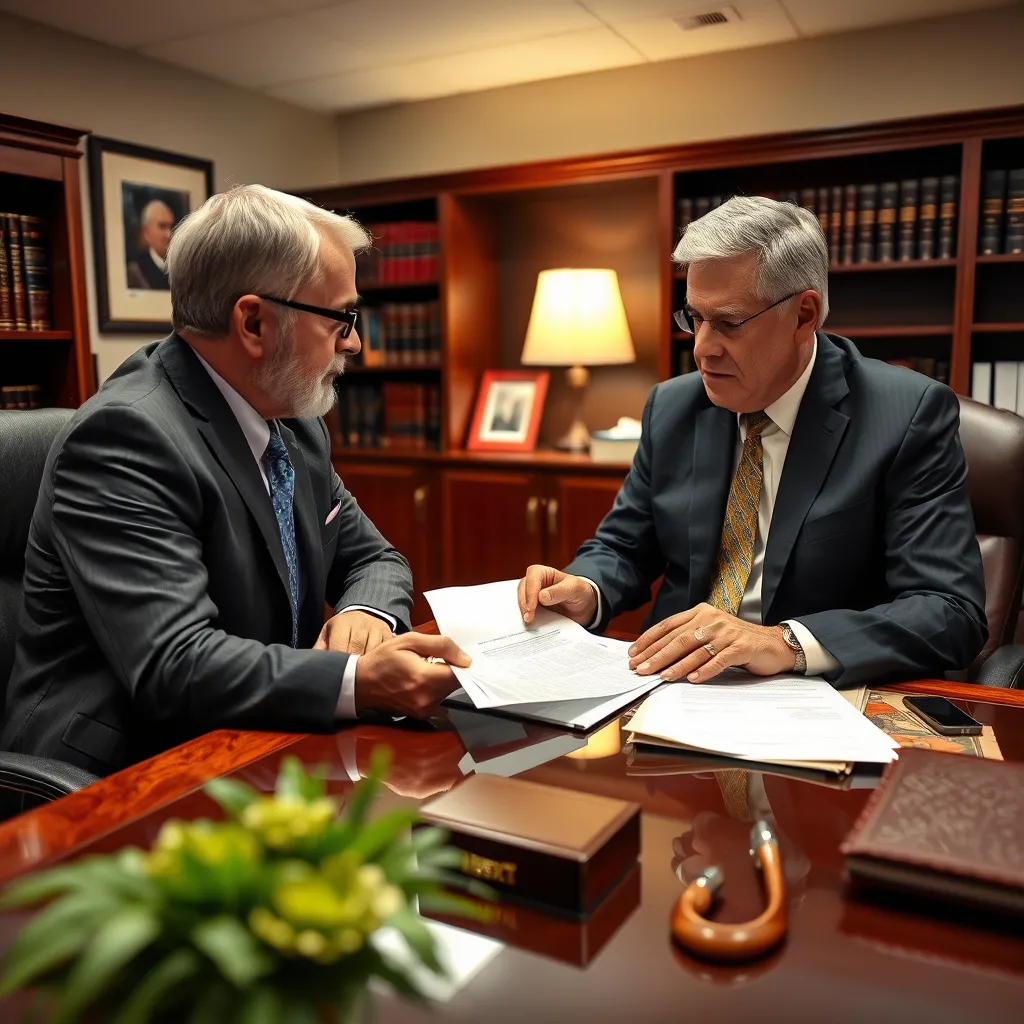
Retirement Account Division Lawyer Manassas, VA
In a Virginia divorce, retirement accounts—pensions, 401(k)s, IRAs, military pensions, and government plans—are often among the most valuable marital assets. Reaching a fair division of these accounts under Virginia’s equitable distribution statute requires both a working knowledge of the substantive law under Va. Code § 20‑107.3 and familiarity with the procedural tools—principally the qualified domestic relations order, or QDRO—that actually transfer a portion of one spouse’s retirement plan to the other. Law Offices Of SRIS, P.C., founded in 1997, concentrates part of its family law practice on the identification, characterization, valuation, and division of retirement assets in divorce actions filed in Manassas and throughout Northern Virginia. Mr. Sris, the firm’s Owner and Founder, is admitted in Virginia, Maryland, the District of Columbia, New Jersey, and New York, and the firm’s Fairfax location serves clients across Prince William County, the City of Manassas, and Manassas Park. If you are facing a divorce that involves a retirement account and want to understand how your plan is likely to be treated by the court, contact Law Offices Of SRIS, P.C. at (888) 437‑7747 to request a consultation. Law Offices Of SRIS, P.C. – Advocacy Without Borders.
What Retirement Account Division Means in Manassas, Virginia
Virginia is an equitable distribution state, not a community‑property state. That means the court does not automatically split assets 50–50. Instead, the judge classifies each retirement account as marital, separate, or hybrid, values the marital component, and then divides that portion after considering the eleven factors listed in Va. Code § 20‑107.3. A retirement plan that was started wholly before the marriage is typically separate property, while contributions made during the marriage—and the passive growth on those contributions—are generally marital property. For defined‑benefit plans such as the Virginia Retirement System or a federal CSRS/FERs pension, the marital share is often calculated using a coverture fraction that compares the time of plan participation during the marriage to the total participation period. The resulting division is then implemented through a QDRO filed with the plan administrator, a separate legal document that must track the language of the final divorce decree precisely.
Cases filed in the City of Manassas or Manassas Park proceed through the Thirty‑first Judicial District. Divorce and equitable distribution matters are handled by the Circuit Court at 9311 Lee Avenue in Manassas, while standalone custody, child support, and protective order matters are heard by the Juvenile and Domestic Relations District Court at the same address. When retirement accounts are part of a divorce, the Circuit Court retains jurisdiction to enter the QDRO even after the final decree of divorce has been entered, if the decree reserved authority over plan division. A divorce action in Manassas requires at least one party to have been a resident and domiciliary of Virginia for six months before filing, and the filing takes the form of a Complaint—not the obsolete “Complaint”—with a filing fee and service costs. For retirement‑intensive cases, the firm works with forensic accountants and plan administrators to trace the character of each account and to prepare valuation reports that the court can rely on at trial or in settlement negotiations.
How Mr. Sris and the Firm’s Of Counsel Attorneys Handle Retirement Account Division Cases
Retirement asset division begins with a thorough discovery phase. The firm’s attorneys request copies of all plan documents, summary plan descriptions, and account statements. They identify defined‑contribution plans, defined‑benefit plans, IRAs, military pensions—including those subject to the Uniformed Services Former Spouses’ Protection Act—and other deferred compensation arrangements. Each asset is classified as marital or separate using the tracing principles recognized by Virginia courts. For commingled accounts, the firm works with financial professionals to reconstruct the source of every deposit, separating the marital component from any separate‑property contribution. Once the marital share is determined, the question becomes how to divide it. Virginia law allows the court to order a percentage of the marital share of a retirement plan to be paid directly to the other spouse through a QDRO, or to offset the value of the retirement account against other marital assets such as the family home or investment accounts. The choice between a QDRO and an offset can have significant tax consequences and can affect the liquidity of each party’s post‑divorce finances, so these decisions are made collaboratively with the client and with tax advisors.
The firm’s attorneys then work to draft a separation agreement—or, if the case is contested, to present evidence to the court—that proposes a division consistent with the statutory factors. If a QDRO is necessary, the QDRO must comply with both the Employee Retirement Income Security Act and the specific requirements of the plan in question. The firm handles QDRO drafting in‑house and coordinates with the plan administrator to obtain pre‑approval of the order before it is submitted to the court for entry. After the decree is final, the firm tracks the QDRO through the plan’s acceptance process and ensures that the alternate payee receives the designated benefit. Throughout this entire process, the focus remains on achieving an outcome that reflects the statutory factors and protects the client’s long‑term financial interests.
About Mr. Sris and the Firm’s Of Counsel Attorneys
Mr. Sris, Owner and Founder of Law Offices Of SRIS, P.C., has practiced family law since 1997 and is a former prosecutor. He testified before the Virginia House Courts of Justice Committee in support of 2019 HB 635 (chief patron Del. David Bulova), which revised the equitable distribution provisions of Va. Code § 20‑107.3—the very statute that governs retirement account division in Virginia. His multi‑state licensure in Virginia, Maryland, the District of Columbia, New Jersey, and New York, together with his accounting and information‑systems background, equips him to handle cases that involve complex financial instruments and cross‑jurisdictional fact patterns. Mr. Sris keeps a limited personal caseload so that he can remain directly involved in the strategic decisions of each matter, while the firm’s Of Counsel attorneys support discovery, motion practice, and settlement negotiations.
The firm’s Of Counsel attorneys bring extensive combined legal experience to retirement‑division cases. Each Of Counsel attorney contracts directly with Law Offices Of SRIS, P.C. and concentrates in litigation, bringing a blend of courtroom experience and attention to the financial nuance that retirement‑asset cases demand. The team includes attorneys with backgrounds that include former prosecutorial service, former law‑enforcement service as a Virginia State Trooper, and decades of trial‑court appearances in Northern Virginia. This combination of institutional knowledge and hands‑on litigation experience allows the firm to evaluate the strengths and weaknesses of a retirement‑division claim early in the case and to advise clients on whether settlement or trial offers the better path to a fair result. Results may vary.
Frequently Asked Questions
Is Virginia a community property state for retirement accounts?
No, Virginia is an equitable distribution state. The court does not divide retirement accounts automatically 50–50. Instead, the judge classifies each account as marital or separate property and then distributes the marital share equitably after considering the eleven factors in Va. Code § 20‑107.3. The Circuit Court at 9311 Lee Avenue in Manassas handles all divorce and equitable distribution cases, including orders dividing retirement plans. Separate property—accounts funded wholly before marriage or with gifts and inheritances—is not subject to division.
What retirement accounts are divisible in a Manassas divorce?
Qualified retirement plans, IRAs, military pensions, and government plans are all potentially divisible to the extent they contain a marital component. 401(k)s, 403(b)s, thrift savings plans, defined‑benefit pensions, and deferred compensation accounts are subject to equitable distribution. For defined‑benefit plans, the marital share is typically calculated using a coverture fraction. Military pensions are divisible under the Uniformed Services Former Spouses’ Protection Act if certain jurisdictional tests are met. The firm works with financial professionals to identify and value every retirement asset in the marital estate and to determine whether a QDRO or an offset is the most appropriate method of division.
What is a QDRO and why is it needed in Virginia?
A qualified domestic relations order (QDRO) is a court order that instructs a retirement plan administrator to pay a portion of a plan participant’s benefit directly to an alternate payee—usually the former spouse. A QDRO is necessary because most retirement plans governed by ERISA cannot lawfully pay benefits to anyone other than the participant without one. The QDRO must be separate from the divorce decree and must comply with both the plan’s specific requirements and ERISA’s anti‑alienation rules. The firm drafts QDROs in‑house and coordinates with plan administrators to obtain pre‑approval before submitting the order to the Manassas Circuit Court.
How does the Manassas court determine what portion of a retirement account is marital?
The court applies a tracing analysis: contributions made before marriage or from separate property are separate, while contributions made during the marriage—and the passive growth on those contributions—are marital. For defined‑benefit plans, the marital share is often expressed as a coverture fraction, calculated by dividing the period of plan participation during the marriage by total participation. For defined‑contribution plans such as 401(k)s, the court looks at account statements to determine the balance on the date of marriage and the date of separation. Commingled accounts require a more detailed forensic reconstruction. The firm retains forensic accountants when necessary to assist with tracing and with presenting the evidence to the court.
Can a retirement account be offset with other assets in a Manassas divorce?
Yes, Virginia law permits the court to offset the value of a marital retirement account against other marital property, such as the family home, investment accounts, or a business interest. An offset avoids the need for a QDRO but requires a careful valuation of all marital assets so that the offset is equitable. Offsetting a retirement account can create liquidity issues, because the spouse receiving the offset may have to sell the offsetting asset to realize its value, while the spouse keeping the retirement account retains tax‑deferred growth. The choice between a QDRO and an offset is a strategic decision that the firm discusses with the client after full financial disclosure.
Do I need a lawyer to divide a retirement account in a Virginia divorce?
Virginia law does not require you to hire an attorney, but dividing a retirement account without legal guidance carries significant financial risks. A QDRO that does not comply with the plan’s requirements may be rejected, causing the alternate payee to lose the benefit or incur unnecessary legal and administrative costs. Misclassifying a retirement account as separate or marital can result in an inequitable settlement that cannot easily be undone after the decree is final. An experienced attorney can identify the marital share, coordinate with financial professionals, and prepare a QDRO that the plan administrator will accept. For a consultation about your retirement‑division matter in Manassas, contact Law Offices Of SRIS, P.C. at (888) 437‑7747.
How long does it take to divide a retirement account in a Manassas divorce?
The timeline depends on whether the divorce is uncontested or contested and on the complexity of the retirement accounts involved. If the parties have already signed a comprehensive separation agreement that addresses retirement division, the court can enter a QDRO concurrently with the final decree, and the entire process may conclude within the time frame set by the court’s calendar. Contested cases that require valuation, tracing, and trial can extend the timeline. The QDRO approval process with a plan administrator can itself take several weeks or longer after the court enters the order, depending on the administrator’s workload. The firm tracks each QDRO through to acceptance so that the client receives the benefit as soon as administratively possible.
Are military pensions treated differently in a Virginia divorce?
Yes—military retired pay is divisible under state divorce law only if the member’s service meets the requirements of the Uniformed Services Former Spouses’ Protection Act (USFSPA). Generally, the member must have served at least ten years of creditable service overlapping with ten years of marriage for the former spouse to receive direct payment from the Defense Finance and Accounting Service. If the jurisdictional test is not met, the court may still treat the military pension as marital property and award an offset. The firm analyzes the member’s career timeline early in the case to determine the most effective method of dividing military retired pay, taking into account survivor benefit plan elections and disability‑pay offsets.
What should I bring to a consultation about retirement account division?
Bring any plan statements, summary plan descriptions, and the most recent account balance reports for every retirement account held by either spouse. Also bring your marriage certificate, any prenuptial or postnuptial agreement, and a timeline of when each account was opened relative to the marriage. If you have already filed a divorce Complaint, bring the file‑stamped copy and any pendente lite orders. The firm provides a checklist before the consultation so that we can give you a preliminary assessment of how the accounts are likely to be classified and divided under Virginia law.
Will I owe taxes on a retirement account that I receive in a divorce?
Receiving a retirement account through a QDRO is generally not a taxable event for the recipient if the transfer is made incident to divorce. The alternate payee is treated as the plan participant for tax purposes, and taxes are deferred until distributions are taken, just as they would have been for the original participant. However, if the retirement account is offset by cash or other assets, the tax consequences depend on the nature of the offsetting asset. The firm works with tax advisors to evaluate the after‑tax impact of any proposed division before it is presented to the court or incorporated into a separation agreement. For case‑specific tax guidance, consult a qualified tax professional.
Additional Virginia Resources: This page is for general informational purposes and does not create an attorney‑client relationship. For the full text of the equitable distribution statute, see Va. Code § 20‑107.3. For family‑division resources and court information for the Manassas Circuit Court, visit Virginia’s Judicial System — Manassas Circuit Court. For free public‑access legal resources, see the Virginia Courts website.
Attorney advertising. Prior results do not guarantee a similar outcome. Case results depend on a variety of factors unique to each case. Results may vary. © 1997–2026 Law Offices Of SRIS, P.C. Phones answered during business hours. By appointment. Fairfax Location — 4008 Williamsburg Court, Fairfax, VA 22032. Reach us at (888) 437‑7747.