
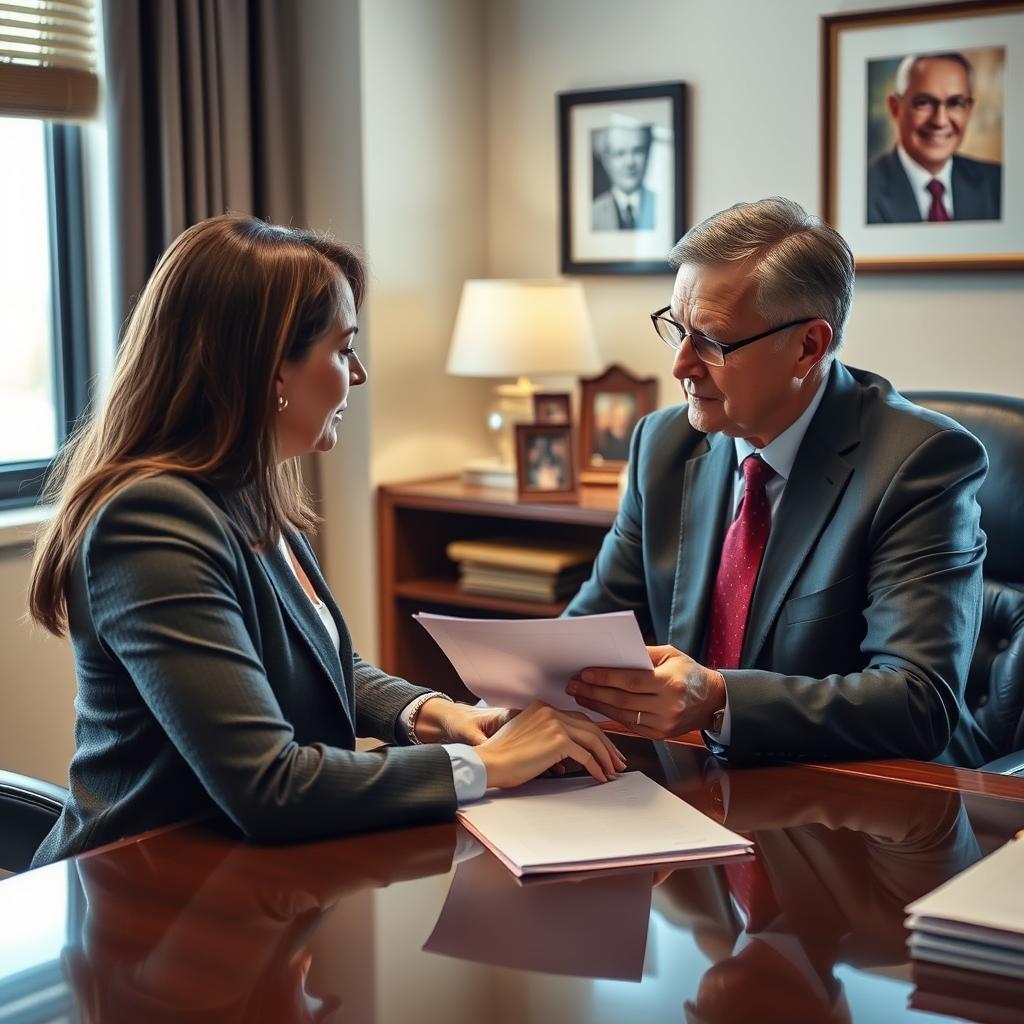
Service Member Divorce Lawyer Fairfax County, VA
Fairfax County is home to a significant population of active‑duty service members, reservists, and their families, many of whom live near the Pentagon, Fort Belvoir, and other military installations. When a service member’s marriage ends, the legal process involves far more than the standard concerns of a civilian divorce. Federal protections under the Servicemembers Civil Relief Act (SCRA), the division of military retired pay governed by the Uniformed Services Former Spouses’ Protection Act (USFSPA), and the interplay between Virginia’s equitable distribution rules and the unique demands of military life all shape how these cases proceed.
Mr. Sris and his Of Counsel at Law Offices Of SRIS, P.C. represent both service members and their spouses in Fairfax County divorce matters. The firm, founded in 1997, works with clients to address the financial, custodial, and procedural issues that are specific to military families. From navigating the stay of proceedings during deployment to securing a fair division of a military pension, the firm’s focus is on helping clients reach durable resolutions while protecting their rights under both state and federal law. Reach our Fairfax location at (888) 437‑7747 to schedule a consultation.
What Service Member Divorce Means in Fairfax County
Fairfax County’s Circuit Court hears all divorce and equitable distribution cases, while the Juvenile and Domestic Relations District Court handles standalone custody, visitation, and support matters. Because of the area’s concentration of military families, the courts regularly address the issues that arise when a service member is one of the parties — including questions about jurisdiction, deployment‑related custody modifications, and the treatment of military retirement assets under Virginia law.
Virginia is an equitable distribution state, not a community property state. In a divorce, the court classifies property as either marital or separate and then divides the marital estate in a manner it considers fair after weighing the factors listed in Va. Code § 20‑107.3. For a service member, that classification can involve the service member’s pension, Thrift Savings Plan, Survivor Benefit Plan, and other military‑specific benefits. Federal law — primarily the USFSPA — permits Virginia courts to treat disposable military retired pay as marital property, provided the court has jurisdiction over the service member. Counsel familiar with both the Virginia statutory scheme and the federal overlay is critical to ensure a complete and accurate property division.
A divorce may not be maintained in Virginia unless one of the parties has been an actual bona fide resident and domiciliary of the Commonwealth for at least six months immediately preceding the filing of the suit. Va. Code § 20‑97.
Source: Va. Code § 20‑97
Reviewed by Mr. Sris, admitted in VA/MD/DC/NJ/NY.
Virginia law provides for no‑fault divorce after the parties have lived separate and apart for one year, or for six months if there are no minor children of the marriage and the parties have entered into a separation agreement. Va. Code § 20‑91(9).
Source: Va. Code § 20‑91
Reviewed by Mr. Sris, admitted in VA/MD/DC/NJ/NY.
In addition to the statutory waiting periods, fault‑based grounds — such as adultery or cruelty — remain available in Virginia and can affect the timing of the divorce and the division of assets. For service members, fault allegations may also have collateral consequences under the Uniform Code of Military Justice. An experienced family lawyer can evaluate whether pursuing or defending against a fault ground is in the client’s interest given the overall circumstances of the marriage and the military career.
How Mr. Sris and His Of Counsel Handle Service Member Divorce Cases
Every service member divorce requires a careful inventory of assets that are unique to military life. Mr. Sris and his Of Counsel work with clients to identify all marital property, including the service member’s retirement pay, TSP accounts, and survivor benefits, and to understand how the length of the marriage and the overlap of military service may affect the division of those assets. The team also reviews pay records, Leave and Earnings Statements, and any existing separation agreements to build a complete picture of the financial landscape.
Child custody and visitation plans in military families must account for the possibility of deployment, PCS moves, and irregular training schedules. The firm advises clients on the practical and legal steps that can be built into a parenting plan to preserve the parent‑child relationship even when the service member is stationed away from Fairfax County. When a case is contested, Mr. Sris — a former prosecutor — draws on his courtroom experience to present clear, well‑prepared arguments. The team also handles modifications of custody and support orders when a parent’s military obligations change. India is not a signatory to the 1980 Hague Convention on Civil Aspects of International Child Abduction.
The SCRA gives service members the right to request a stay of civil proceedings if their military duties materially affect their ability to appear. Mr. Sris and his Of Counsel help eligible clients assert this protection and, when representing the non‑military spouse, respond to a stay request so that the case does not stall indefinitely. By approaching each matter with a firm understanding of both Virginia family law and the federal statutes that protect service members, the team works to move the case toward resolution efficiently.
About Mr. Sris and His Of Counsel Team
Mr. Sris, Owner and Founder of Law Offices Of SRIS, P.C., established the firm in 1997. He is a former prosecutor whose experience in the courtroom informs his approach to contested family law matters. Mr. Sris testified before the Virginia House Courts of Justice Committee in support of 2019 HB 635 (chief patron Del. David Bulova). He is admitted to practice in Virginia, Maryland, the District of Columbia, New Jersey, and New York, and he personally oversees the firm’s family law practice.
The firm’s Of Counsel attorneys — all of whom are experienced litigators — contribute extensive knowledge of Virginia procedure, negotiation strategy, and trial advocacy. The Fairfax location serves clients throughout Fairfax County and the neighboring jurisdictions of Prince William, Stafford, Fauquier, Loudoun, and Arlington Counties. Every matter receives the focused attention of a legal team that is accustomed to handling the intersections of military service, federal preemption, and state domestic relations law. Reach our Fairfax location at (888) 437‑7747 to speak with a member of the team.
Frequently Asked Questions
How does a service member’s military pension get divided in a Virginia divorce?
Under the Uniformed Services Former Spouses’ Protection Act, Virginia courts may treat disposable military retired pay as marital property and divide it equitably between the spouses. The specific details depend on whether the court has jurisdiction over the service member and on the portion of the pension that accrued during the marriage. A spouse may be awarded a share of the retirement directly from the Defense Finance and Accounting Service if statutory conditions are satisfied. Mr. Sris and his Of Counsel evaluate the length of the marriage, the years of service, and the service member’s pay records to present a complete picture to the court.
Can a service member delay a divorce proceeding due to deployment?
Yes, the Servicemembers Civil Relief Act allows a service member to request a stay of the proceeding if their military duties materially affect their ability to participate. The court must grant a minimum 90‑day stay upon proper application, and additional stays may be available. The non‑military spouse may oppose a stay if they can show that the service member’s absence will not prejudice the case. The firm assists both sides with the procedural requirements and works to keep the case moving once the stay is lifted. For a consultation, reach Mr. Sris and his Of Counsel at (888) 437‑7747.
What child custody issues arise when a parent is stationed in Fairfax County?
Custody disputes in military families often involve deployment schedules, PCS moves, and the need for flexible parenting plans that anticipate the service member’s absences. Virginia courts decide custody based on the best interests of the child under Va. Code § 20‑124.3. A parenting plan can include provisions for virtual visitation, designation of a temporary decision‑maker during deployment, and a schedule that adjusts when the service member returns. An experienced family lawyer can help craft an agreement that balances the demands of military life with the child’s need for stability.
Do Virginia courts have jurisdiction over a service member stationed in Fairfax County?
Yes, if either spouse meets Virginia’s residency requirement or consents to personal jurisdiction, the Fairfax County Circuit Court can hear the divorce. For military personnel, a service member is considered a resident of Virginia for divorce purposes if they are domiciled in the Commonwealth, even if they maintain a home‑of‑record elsewhere. The issue of jurisdiction over a military pension also requires that the service member consent to the court’s authority over the retirement pay. The firm evaluates each client’s situation to confirm that the court has proper jurisdiction before filing. For guidance on your specific situation, reach Law Offices Of SRIS, P.C. at (888) 437‑7747.
What are the residency requirements for filing a divorce in Fairfax County when one spouse is in the military?
At least one party must have been a resident and domiciliary of Virginia for a continuous six‑month period immediately before filing the divorce complaint. If the service member is stationed in Virginia and intends to remain, that can establish domicile. A civilian spouse who has lived in Fairfax County for six months also satisfies the requirement. The firm reviews supporting documents — such as military orders, lease agreements, and voter registration records — to demonstrate residency and meet the statutory mandate under Va. Code § 20‑97. To discuss the details of your matter, contact Law Offices Of SRIS, P.C. at (888) 437‑7747.
How does the Servicemembers Civil Relief Act affect divorce cases?
The SCRA provides a temporary stay of civil proceedings and protects service members from default judgments when their military obligations prevent them from appearing in court. A service member may invoke the SCRA at any stage of the divorce by submitting a statement explaining how their duties impair their ability to defend the case. The court may also appoint an attorney to represent the service member if one is not already retained. For the non‑military spouse, understanding the SCRA’s timeline and requirements is essential to avoid unnecessary delay. Reach our Fairfax location at (888) 437‑7747 to schedule a consultation.
We also represent clients in family law matters across Northern Virginia, including in Prince William County, Stafford County, Fauquier County, Loudoun County, and Arlington County.
Primary‑source authority: For the official text of Virginia’s divorce grounds, see the Virginia Code § 20‑91. For information about the Fairfax County Circuit Court, where divorce and equitable distribution matters are heard, visit the Fairfax County Circuit Court website.
Law Offices Of SRIS, P.C. – Fairfax Location: 4008 Williamsburg Court, Fairfax, VA 22032. By appointment only. Call (888) 437‑7747.
Attorney advertising. Prior results do not guarantee a similar outcome. Results may vary.
Case results depend on a variety of factors unique to each case.