
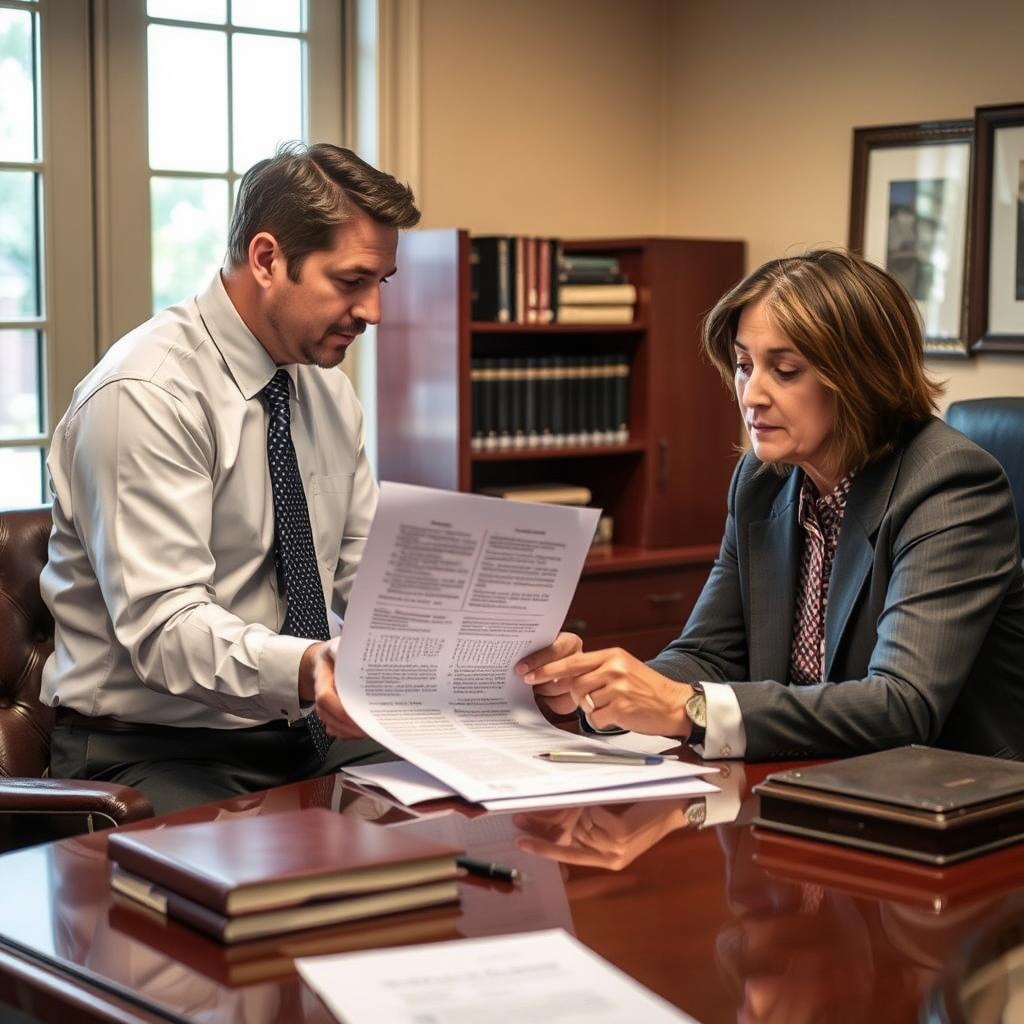
Trespassing Lawyer Fairfax County, VA
A trespassing charge in Fairfax County, Virginia, is a criminal offense that can lead to jail time, fines, and a lasting record. The charge is typically prosecuted as a Class 1 misdemeanor under Va. Code § 18.2‑119, which addresses going upon or remaining on another’s property after having been forbidden to do so. Whether the allegation involves a retail store, a private residence, or public grounds, the Commonwealth’s Attorney for Fairfax County pursues these matters in the General District Court or, on appeal, in the Circuit Court. Because a conviction can affect employment clearances, professional licenses, and immigration status, many people facing a trespassing allegation in Fairfax County seek experienced legal guidance. Our Fairfax location at 4008 Williamsburg Court serves clients throughout Fairfax, Burke, Centreville, Chantilly, Herndon, Reston, McLean, Vienna, Tysons, Oakton, Springfield, Annandale, and the Falls Church area. Reach Law Offices Of SRIS, P.C. at (888) 437‑7747 to request a consultation.
Law Offices Of SRIS, P.C. – Advocacy Without Borders.
What Trespassing Means in Fairfax County, Virginia
In Virginia, the crime of trespassing is defined broadly: a person commits the offense by going onto or remaining on another’s land, buildings, or premises after having been told to leave—orally, in writing, or by a properly posted sign. The statute covers both entry after being forbidden and refusal to leave after being asked to depart. In Fairfax County, these cases are heard by the Fairfax County General District Court, located at 4110 Chain Bridge Road in Fairfax. If a defendant exercises the right to appeal or if the charge is elevated, the matter proceeds in the Fairfax County Circuit Court within the Nineteenth Judicial District.
The maximum penalty for a Class 1 misdemeanor conviction is up to twelve months in jail and a fine of up to $2,500. Beyond the immediate sentence, a trespassing conviction creates a criminal record that can surface on background checks for employment, housing, and volunteer positions. For noncitizens, even a single misdemeanor can carry immigration consequences under federal law. Fairfax County courts do not allow plea bargaining in the traditional sense—judges do not negotiate—but the Commonwealth’s Attorney may agree to amend or dismiss a charge based on the evidence and circumstances. First-offender programs, such as deferred disposition under Va. Code § 19.2‑303.2, may be available in appropriate cases, allowing a charge to be dismissed after the successful completion of probation. Expungement of the record is generally limited to acquittals, dismissals, or nolle prosequi outcomes under Va. Code § 19.2‑392.2. Our team helps clients understand each procedural option and works toward outcomes that minimize the long-term impact of a trespassing charge.
How Mr. Sris and His Of Counsel Handle Trespassing Cases
When someone contacts Law Offices Of SRIS, P.C. about a trespassing charge in Fairfax County, the first step is to understand the exact factual circumstances and the evidence the Commonwealth intends to present. The consultation explores how the alleged notice was communicated—whether by verbal warning, written notice, or signage—and whether any affirmative defense, such as consent or necessity, may apply. Mr. Sris and his Of Counsel examine every element the prosecution must prove, identify procedural or evidentiary weaknesses, and assess whether the charge can be challenged through a motion or negotiation.
Because Virginia trial procedure places the initial hearing in the General District Court, the team prepares for a bench trial while keeping open the possibility of an appeal de novo to the Circuit Court, where a jury trial may be available. Throughout the process, Mr. Sris and his Of Counsel communicate directly with the assigned prosecutor, presenting mitigating information, highlighting gaps in the evidence, and advocating for a reduction or dismissal when the facts support it. The timeline varies based on court scheduling and case complexity; our team keeps clients informed at each stage. The firm’s approach is grounded in decades of collective experience and a thorough knowledge of Fairfax County court practices.
About Mr. Sris and His Of Counsel Team
Mr. Sris, Owner and Founder of Law Offices Of SRIS, P.C., is a former prosecutor who has practiced since 1997. He is admitted in Virginia, Maryland, the District of Columbia, New Jersey, and New York, giving the firm a multi‑state perspective that benefits clients whose lives cross jurisdictional lines. Mr. Sris testified before the Virginia House Courts of Justice Committee in support of 2019 HB 635 (chief patron Del. David Bulova), reflecting his commitment to improving Virginia’s legal framework. Mr. Sris and his Of Counsel bring over 120 years of combined legal experience and have documented 4,739+ firm-wide results. Results may vary.
On every criminal matter, Mr. Sris is supported by a team of seasoned Of Counsel attorneys, each of whom brings a distinct background to case preparation. The team includes professionals with former prosecutorial and law‑enforcement experience, which yields insight into how the other side builds its case. In Fairfax County, Mr. Sris and his Of Counsel have documented 501 case results—including 336 dismissals or not‑guilty verdicts and 143 reduced or amended charges. Results may vary. The firm’s Fairfax location at 4008 Williamsburg Court serves clients throughout northern Virginia. By‑appointment consultations are available by calling (888) 437‑7747.
Frequently Asked Questions
What is the maximum penalty for trespassing in Fairfax County?
Trespassing is a Class 1 misdemeanor under Virginia law, punishable by up to 12 months in jail and a fine of up to $2,500. The actual sentence depends on factors such as prior record, the nature of the alleged trespass, and whether the defendant accepts or contests the charge. In Fairfax County General District Court, many first‑offense trespassing cases are resolved through negotiation or deferred disposition, potentially avoiding a conviction. Because a trespassing conviction becomes part of a permanent criminal record, understanding the full range of potential consequences is essential before deciding how to proceed.
How does a Virginia lawyer defend against trespassing charges?
Defense strategies in trespassing cases often focus on whether the defendant was properly notified that entry was forbidden and whether any exception or privilege applies. An experienced attorney will examine whether the warning was clear and legally sufficient, whether signage complied with the statute, and whether the defendant had a lawful reason to be on the property—such as an emergency, consent, or a good‑faith belief of right to enter. In Fairfax County, counsel may also challenge procedural issues, negotiate with the prosecutor for a reduction or nolle prosequi, and, when appropriate, seek first‑offender probation under Va. Code § 19.2‑303.2. The specific strategy depends on the facts of the case and the evidence the Commonwealth intends to offer.
Will a trespassing conviction show up on my record in Virginia?
Yes, a conviction for trespassing results in a permanent criminal record that appears on background checks conducted by employers, landlords, and licensing agencies. Virginia law limits expungement to cases ending in acquittal, dismissal, or nolle prosequi under Va. Code § 19.2‑392.2. A conviction cannot be expunged under current law. Because of these long‑term consequences, many people charged with trespassing in Fairfax County work with an attorney to pursue an outcome that avoids a conviction, such as a deferred disposition or a negotiated amendment to a non‑criminal infraction where possible.
What should I do if I am facing trespassing charges in Fairfax County?
Contact a criminal defense attorney as soon as possible and avoid discussing the facts of the case with anyone other than your lawyer. Preserve any evidence that may support your defense—such as photographs of the area, copies of posted signs, witness contact information, and any documentation showing you had permission to be on the property. Be aware of your court date and do not miss it, as failing to appear can lead to additional charges. An attorney can evaluate the evidence, explain your options, and begin communicating with the prosecutor before the first court hearing. Reach Law Offices Of SRIS, P.C. at (888) 437‑7747 to request a consultation.
Do I need a lawyer for a trespassing charge in Fairfax County?
You are not legally required to hire a lawyer, but representing yourself on a criminal charge that carries possible jail time and a permanent record is risky. Virginia criminal procedure has specific rules about evidence, witness testimony, and court deadlines that can be difficult to navigate without legal experience. An attorney familiar with the Fairfax County courts can assess the strength of the Commonwealth’s case, identify procedural and evidentiary weaknesses, and negotiate a resolution that a self‑represented defendant may not be able to secure. The cost of legal representation is often far less than the long‑term consequences of a conviction. For a consultation about your trespassing matter, reach Law Offices Of SRIS, P.C. at (888) 437‑7747.
How long does a trespassing case take in Fairfax County?
The timeline varies depending on court scheduling, the complexity of the case, and whether the charge is resolved at the General District Court level or appealed to the Circuit Court. A misdemeanor trial in the Fairfax County General District Court may be scheduled within several weeks of the arraignment, while an appeal to the Circuit Court extends the process by additional months. An attorney can provide a more informed estimate after reviewing the court’s docket and the specifics of your situation. Acting promptly after receiving a summons helps preserve evidence and allows for earlier engagement with the prosecutor, which can affect both the timeline and the outcome.
Related criminal defense services in Northern Virginia:
Prince William County criminal defense lawyer ·
Stafford County criminal defense lawyer ·
Fauquier County criminal defense lawyer ·
Loudoun County criminal defense lawyer ·
Arlington County criminal defense lawyer
External resources:
Virginia Code § 18.2‑119 (Trespassing) ·
Virginia Judicial System ·
Va. Code § 19.2‑392.2 (Expungement)
Attorney advertising. Prior results do not guarantee a similar outcome. Case results depend on a variety of factors unique to each case. Results may vary.